

What are the different types of extruder die plates?
Leave a message

Hey there! As a supplier of extruder die plates, I've got a ton of knowledge about the different types out there. So, let's dive right in and explore these cool components that play a huge role in the extrusion process.
1. Circular Die Plates
Circular die plates are probably one of the most common types you'll come across. They're used in a wide range of industries, from plastics to food processing. The circular shape allows for a uniform flow of the extruded material. When the material passes through the holes in the circular die plate, it forms round or tubular products.
For instance, in the plastic industry, circular die plates are used to make pipes and tubes. The size and number of holes in the die plate can be customized according to the specific requirements of the product. If you need a thicker pipe, the holes can be made larger. And if you want multiple small tubes, more holes can be added.
In the food industry, circular die plates are used to make pasta. The dough is forced through the holes, and depending on the shape of the holes, you can get different types of pasta, like spaghetti or macaroni. It's amazing how a simple circular die plate can create such a variety of products!
You can learn more about the components used in food processing industries like the conveying equipment. Check out the Cotton Conveyor Belt which is often used in conjunction with extruders to transport the finished products.
2. Rectangular Die Plates
Rectangular die plates are another important type. They're commonly used when you need to produce flat or sheet-like products. In the plastic industry, they're used to make plastic sheets that can be used for packaging, construction, or even in the automotive industry.
The advantage of rectangular die plates is that they can produce a large, continuous sheet of material. The width and thickness of the sheet can be controlled by adjusting the design of the die plate. For example, if you want a wider sheet, the die plate can be made wider. And if you need a thinner sheet, the gap between the plates can be reduced.
In the metalworking industry, rectangular die plates are used for processes like extrusion of aluminum sheets. The metal is heated and then forced through the die plate to form the desired shape. It's a complex process, but the rectangular die plate makes it possible to create high-quality metal sheets with precise dimensions.
3. Profile Die Plates
Profile die plates are a bit more specialized. They're used to create products with specific cross-sectional shapes. For example, in the construction industry, profile die plates are used to make window frames, door frames, and other structural components.
These die plates have a very precise design that matches the exact shape of the product you want to create. The material is forced through the die plate, and it takes on the shape of the die. This allows for the production of complex shapes that would be difficult or impossible to create using other methods.
In the furniture industry, profile die plates are used to make decorative moldings. These moldings can add a touch of elegance to furniture pieces. The die plates can be designed to create intricate patterns and details, giving the furniture a unique look.
If you're in the pellet - mill industry, you might be interested in the Closed End Grooved Roller Shell. It's an important component that works in tandem with extruders and die plates in the pellet - making process.
4. Multi - Hole Die Plates
Multi - hole die plates are designed with a large number of holes. They're commonly used when you need to produce multiple small products at the same time. In the plastic industry, they're used to make plastic pellets. The molten plastic is forced through the holes, and as it comes out, it is cut into small pellets.
These pellets are then used in various manufacturing processes, like injection molding. The size and shape of the pellets can be controlled by adjusting the size and shape of the holes in the die plate. For example, if you want smaller pellets, the holes can be made smaller.
In the pharmaceutical industry, multi - hole die plates are used to make capsules. The gelatin or other materials are extruded through the holes to form the capsule shells. It's a very precise process, and the multi - hole die plate ensures that each capsule is of the right size and shape.
5. Special - Purpose Die Plates
There are also special - purpose die plates that are designed for very specific applications. For example, in the medical industry, there are die plates used to create medical tubing with special features, like a non - stick surface or a specific flexibility.
These die plates are often custom - made to meet the exact requirements of the application. They might have unique hole shapes, coatings, or other features that are not found in standard die plates.
In the aerospace industry, special - purpose die plates are used to create components with very high strength - to - weight ratios. The materials used in these die plates are often high - performance alloys, and the design is optimized to ensure the best possible performance of the final product.
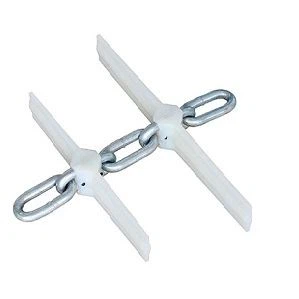
If you're involved in industries that require heavy - duty conveying, the Round Steel Chain is a great option for your conveying systems. It can handle large loads and is very durable.
Factors Affecting Die Plate Selection
When choosing an extruder die plate, there are several factors to consider. First of all, the type of material you're extruding is crucial. Different materials have different properties, like viscosity and melting point. For example, if you're extruding a high - viscosity material, you might need a die plate with larger holes to allow the material to flow through easily.
The shape and size of the final product also play a big role. If you need a complex shape, you'll need a profile die plate. And if you need a large - scale production of small products, a multi - hole die plate might be the best choice.

The production volume is another important factor. If you're producing a large quantity of products, you'll need a die plate that can handle high - speed extrusion and is durable enough to withstand continuous use.
Why Choose Our Extruder Die Plates
At our company, we understand the importance of high - quality die plates. We use the latest manufacturing techniques and the best materials to ensure that our die plates are durable, precise, and efficient.
Our team of experts can work with you to design and manufacture custom die plates that meet your specific requirements. Whether you need a circular die plate for making pasta or a special - purpose die plate for the aerospace industry, we've got you covered.
We also offer excellent customer service. We're always here to answer your questions, provide technical support, and help you with any issues you might have. We believe that building long - term relationships with our customers is the key to our success.
If you're interested in our extruder die plates or have any questions about the different types, don't hesitate to contact us. We're looking forward to discussing your needs and helping you find the perfect die plate for your application. Let's start a great business relationship and create amazing products together!
References
- "Extrusion Technology Handbook" by Roland G. Baker
- "Plastics Extrusion: Principles and Practice" by James L. White and Jose F. Carley
- "Food Extrusion Technology" by Mehmet O. Balci


